What Are Bone Densitometer Devices and How Do They Work?

Introduction
Bone health is a critical aspect of overall well-being, particularly as people age. One of the most effective ways to assess bone strength and diagnose conditions such as osteoporosis is through bone densitometry. This is where bone densitometer devices come into play. These advanced medical tools help healthcare providers measure bone mineral density (BMD), offering valuable insights into the risk of fractures and other bone-related disorders. We'll explore what bone densitometer devices are, how they work, their types, clinical applications, and why they're essential in modern healthcare.
Definition
Bone densitometer devices are medical instruments used to measure bone mineral density (BMD), typically to assess the risk of osteoporosis and fractures. These devices use techniques such as dual-energy X-ray absorptiometry (DEXA or DXA) to produce detailed images and determine the strength and density of bones, most commonly in the spine, hip, or wrist. Bone densitometers are essential for diagnosing bone health conditions, monitoring treatment effectiveness, and guiding preventive care strategies.
What Is a Bone Densitometer?
A bone densitometer is a medical imaging device used to measure bone mineral density (BMD). It plays a pivotal role in diagnosing osteoporosis , a condition characterized by weakened bones and an increased risk of fractures. These devices are also used to assess the effectiveness of osteoporosis treatments and predict future fracture risk.
The measurement taken by a bone densitometer is commonly referred to as a DEXA or DXA scan, which stands for Dual-Energy X-ray Absorptiometry—the most commonly used technique in clinical practice today.
Why Measure Bone Density?
Bone density testing is critical for detecting osteoporosis in its early stages - often before any symptoms or fractures occur. The following are some of the main justifications for employing bone densitometry:
Early diagnosis of osteoporosis
Monitoring the progress of bone loss
Evaluating the effectiveness of treatments
Evaluating fracture risk factors, particularly in older individuals and postmenopausal women
According to the International Osteoporosis Foundation, more than 200 million people worldwide suffer from osteoporosis, making bone density testing an essential part of preventive healthcare.
How Do Bone Densitometer Devices Work?
Bone densitometers operate using low-dose X-ray technology to measure the amount of calcium and other minerals in a segment of bone. The most commonly scanned areas are the hip, spine, and forearm - locations prone to osteoporotic fractures.
1. Dual-Energy X-ray Absorptiometry (DEXA or DXA)
The gold standard for bone densitometry is DEXA. It targets the bone with two X-ray beams of varying energies. The technique determines the bone mineral density by measuring the absorption of each beam by the bone. Accurate results are provided while patient safety is guaranteed by the low radiation dosage.
The scan typically takes about 10-30 minutes, is painless, and does not require any special preparation.
2. Quantitative Computed Tomography (QCT)
QCT is an additional technique for determining bone density. It assesses bone mineral density (BMD) in the hips and spine using CT scanning technology and produces three-dimensional pictures. Although QCT is more comprehensive than DEXA, it is less frequently utilized and exposes users to more radiation.
3. Peripheral Devices
Smaller, portable devices can measure BMD in the wrist, heel, or finger. While these are not as accurate as central DEXA machines, they can be useful for preliminary screening or in settings with limited resources.
Components of a Bone Densitometer
Modern bone densitometers include the following components:
X-ray Generator : Produces dual-energy X-ray beams.
Detector : Determines how many X-rays are able to penetrate the bone.
Computer System : Analyzes data and calculates BMD.
Patient Table : Where the patient lies during the scan.
User Interface/Software : Allows healthcare professionals to view and interpret results.
The system uses algorithms to compare a patient's BMD to a standardized reference population, resulting in scores such as the T-score and Z-score, which are used in diagnosis.
Understanding the Results
Bone densitometry provides numerical scores to evaluate bone health:
T-Score : Compares your BMD to that of a young adult in good health.
Normal : -1.0 and above
Osteopenia (low bone mass) : The range of -1.0 to -2.5
Osteoporosis : -2.5 or lower
Z-Score : Evaluates your BMD in relation to those who are the same age, sex, and body size. A low Z-score may suggest factors other than aging are contributing to bone loss.
These scores help doctors make informed decisions regarding treatment and lifestyle adjustments.
Clinical Applications of Bone Densitometry
There are several clinical contexts in which bone densitometers are employed, including:
Routine screening for osteoporosis in older adults
BMD monitoring for patients receiving corticosteroid or hormone therapy
Assessment of bone health in cancer patients
Post-fracture evaluations
Pediatric evaluations for developmental bone disorders
The information obtained can influence treatment decisions, including the need for medications like bisphosphonates, calcium and vitamin D supplements, or physical therapy.
Benefits of Bone Densitometer Devices
Non-invasive and Quick : Scans only take a few minutes and are painless.
Low Radiation Exposure : Far lower than a standard chest X-ray.
Highly Accurate and Reliable : Particularly DEXA scans.
Essential for Preventive Care : Detects problems before they lead to serious health issues.
Cost-effective : Especially in groups that are more susceptible to fractures brought on by osteoporosis.
Limitations and Considerations
While bone densitometry is highly beneficial, it has some limitations:
It cannot predict fractures with complete certainty.
Results may vary depending on the machine or operator.
Conditions like arthritis or spinal deformities can affect accuracy.
Additionally, it's important for clinicians to consider the full medical history and other risk factors alongside BMD results.
Future Trends in Bone Densitometry
Bone densitometers are becoming increasingly complex as technology develops:
AI and Machine Learning : Improve result interpretation and fracture risk prediction.
Portable and Wireless Devices : Expanding access to underserved populations.
Integration with EHRs : Streamlining patient data for comprehensive care.
3D Imaging : Offering enhanced detail and better visualization of bone structure.
These innovations are poised to make bone health assessments more accessible, accurate, and personalized.
Growth Rate of Bone Densitometer Devices Market
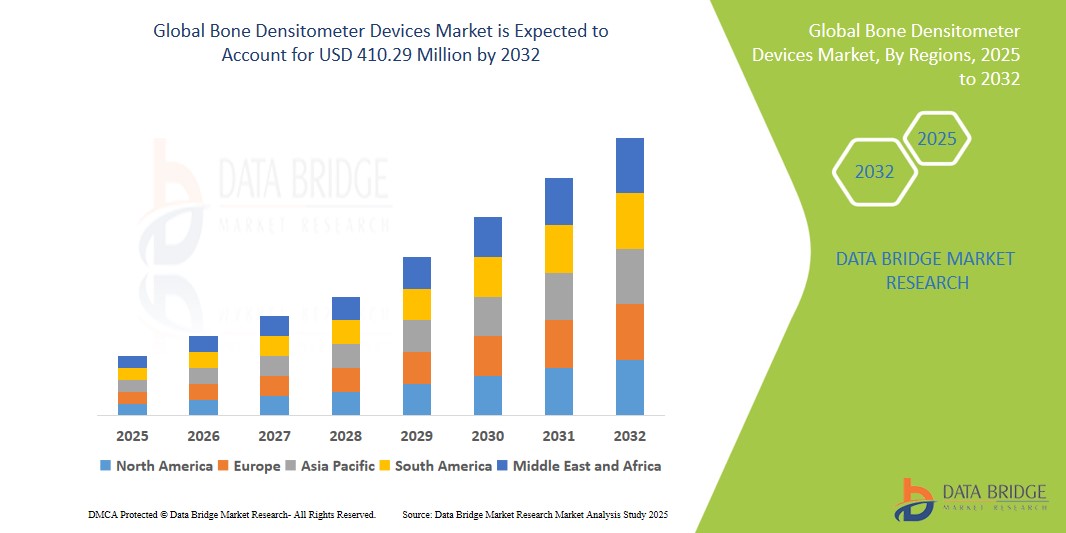
According to Data Bridge Market Research, the globalBone Densitometer Devices Treatment marketwas predicted to be worth USD 335.7 million in 2024 and is anticipated to expand at a compound annual growth rate (CAGR) of 4.2% to reach USD 410.29 million by 2032.
Read More:https://www.databridgemarketresearch.com/reports/global-bone-densitometer-devices-market
Conclusion
Bone densitometer devices are essential tools in the early detection, diagnosis, and management of osteoporosis and other bone-related conditions. By providing a safe, quick, and non-invasive method of measuring bone mineral density, they enable healthcare professionals to intervene early, prevent fractures, and improve patient outcomes.
Комментарии пользователей