Leather Whips: Tradition, Versatility, and Modern Identity

The leather whip is one of the oldest tools known to mankind, blending utility with symbolism across cultures, generations, and professions. From taming wild animals to captivating audiences on stage, leather whips have transcended their functional roots to become a powerful symbol of strength, control, and performance art. Their enduring legacy is not just about cracking sound and spectacle—it's about skill, tradition, and craftsmanship.
A Tool Born of Necessity
Long before the whip became an icon in films or a feature in live shows, it was a simple, practical invention. Early civilizations, such as the Egyptians, Greeks, and Chinese, used whips in agriculture and transportation. They allowed handlers to control animals without physical contact, offering an extended reach and auditory cue that commanded attention.
In regions like the American frontier and rural Australia, leather whip became indispensable for cattle drovers. These tools were crafted from rawhide or tanned leather, made to endure tough weather and rough terrain. A good whip wasn't just equipment—it was an extension of the herder's hand.
Beyond the Farm: The Whip as Art
As societies evolved, so did the purpose of the whip. Today, leather whips are often found not on ranches, but on performance stages, in museums, and in private collections. Whip cracking has grown into a highly skilled art form. Performers intricate choreograph routines with lightning-fast precision, using whips to slice targets, create rhythm, and produce sonic booms—the famous "crack" heard when a whip breaks the sound barrier.
Whip artistry isn't just for show; it requires muscle memory, timing, and fine motor control. It's not unusual for whip artists to spend years refining their technique, mastering different styles from the long bullwhip to the more compact signal whip.
Anatomy of a Leather Whip
Despite the many forms it takes, the core design of a leather whip remains relatively consistent:
Handle: Provides grip and control. Some are rigid; others blend into the whip body.
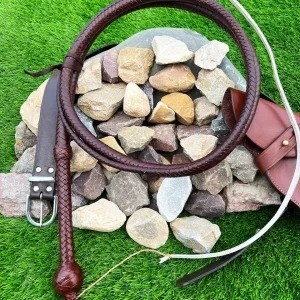
Thong: The main braided body of the whip, usually made from 4 to 24 strands of leather, tapering in width.
Fall: A flexible strip connecting the thong to the tip, giving the whip its final weight and motion.
Cracker or Popper: The tiny piece at the end that makes the whip crack.
The quality of a whip lies in its balance, flexibility, and flow. Top-tier whips are handcrafted, often from kangaroo leather, prized for its strength-to-weight ratio. A well-made whip can last decades with proper care.
Modern-Day Applications
Entertainment and Media
Leather whips gained iconic status thanks to Hollywood. Characters like Indiana Jones, Zorro, and Wonder Woman made the whip part of popular culture. Today, whip stunts are staples in action films, live stunt shows, and circus performances.
Training and Utility
In equestrian sports, whips are still used for signaling and training—not for punishment. In these contexts, whips are lightweight and flexible, offering tactile guidance for horses without causing pain.
Cultural and Ceremonial Use
In some cultures, whips are part of traditional ceremonies or dances. African tribes, Native American rituals, and European folk events have included symbolic or festive uses of the whip to represent bravery, leadership, or purification.
Craftsmanship and Collecting
Many enthusiasts collect artisan whips for their beauty and build quality. Handmade whips are works of art, with intricate braiding, dyed leather, and custom handles. Collectors often commission custom pieces for display or use in sport cracking events.
A Word on Responsibility
Though whips can be used safely and artistically, they also have a history of misuse, particularly in the context of punishment and oppression. This history cannot be ignored. Modern users—whether hobbyists, performers, or professionals—recognize the importance of respectful, ethical usage. Education and responsible ownership are key in keeping whip culture safe, skillful, and separated from negative connotations.
Conclusion: A Legacy That Echoes
The leather whip is far more than a relic of the past. It's a living tool that continues to evolve—shaped by new generations of craftspeople, performers, and enthusiasts. Whether cracking in the hands of a stunt artist or hanging in a collector's study, the whip carries with it stories of ancient herders, daring explorers, and skilled artisans.
In every twist of its leather strands lies a legacy of precision, adaptability, and timeless appeal. The leather whip may have started as a tool, but today, it's a symbol—of control, mastery, and the artistry of motion.

Комментарии пользователей