The Function of Additives in the Refractory Industry

1. Introduction
The refractory industry serves as the backbone of high-temperature industrial operations, including iron and steelmaking, non-ferrous metallurgy, cement production, glass manufacturing, petrochemical processing, power generation, and waste incineration. Refractory materials are engineered to withstand extreme temperatures, mechanical stress, chemical corrosion, and thermal cycling while maintaining dimensional stability and functional reliability.
While the performance of refractories is largely determined by primary raw materials such as alumina, magnesia, silica, zirconia, carbon, and spinel, additives play a decisive and often underestimated role. Typically introduced in small quantities, additives profoundly influence the processing behavior, microstructure evolution, thermo-mechanical properties, corrosion resistance, and service life of refractory products.
This article provides a comprehensive and systematic analysis of the functions of additives in the refractory industry, covering their role in manufacturing, microstructural control, and in-service performance. Both conventional and advanced additives used in modern refractory formulations are discussed in detail.
2. Definition and Classification of Refractory Additives
2.1 Definition of Additives in Refractories
In refractory technology, additives are auxiliary materials intentionally added in controlled amounts—usually ranging from less than 0.1 wt.% to several weight percent—to modify or enhance specific properties of refractory products. Unlike aggregates or matrix materials, additives are not designed to contribute significantly to the bulk composition but to act as functional modifiers.
2.2 Classification of Additives
Refractory additives can be broadly categorized according to their primary function:
Processing and rheology modifiers
Sintering aids
Binder-related additives
Microstructure modifiers
Oxidation inhibitors
Corrosion- and slag-resistance enhancers
Thermal and mechanical performance modifiers
Environmental and sustainability-related additives
Each category addresses a distinct challenge encountered during manufacturing or service.
3. Processing Additives and Their Functions
3.1 Rheology Control and Workability Improvement
In unshaped refractories such as castables, self-flowing materials, gunning mixes, and ramming masses, rheology control is critical. Processing additives such as dispersants and deflocculants improve particle dispersion, reduce inter-particle attraction, and enable lower water addition.
Common dispersants include:
Sodium hexametaphosphate
Polycarboxylate ether-based dispersants
Citric acid and its salts
Lower water demand leads to reduced porosity after drying and firing, resulting in higher bulk density, improved mechanical strength, and enhanced corrosion resistance.
3.2 Lubrication and Shaping Efficiency
Lubricating additives reduce friction during pressing, extrusion, and isostatic forming. They help minimize defects such as lamination, cracking, and density gradients. In shaped refractories, improved lubrication ensures better die filling, dimensional accuracy, and surface quality.
4. Sintering Aids and Densification Enhancement
4.1 Role of Sintering Aids
Many refractory oxides, particularly high-purity alumina and magnesia, exhibit limited sinterability at practical firing temperatures. Sintering aids are introduced to promote mass transport mechanisms, enhance neck formation, and accelerate densification.
Typical sintering aids include:
Boron-containing compounds (e.g., B₂O₃, borates)
Titanium dioxide (TiO₂)
Iron oxide (Fe₂O₃)
Rare earth oxides (e.g., Y₂O₃, La₂O₃)
These additives may form transient liquid phases or alter grain boundary chemistry, significantly reducing sintering temperature and energy consumption.
4.2 Grain Growth Control
While densification is desirable, uncontrolled grain growth can degrade mechanical properties and thermal shock resistance. Certain additives act as grain growth inhibitors, pinning grain boundaries and promoting a fine, uniform microstructure.
5. Binder-Related Additives and Green Strength Development
5.1 Organic Binder Additives
Organic binders and associated additives are widely used in shaped refractories and carbon-containing products. These additives provide green strength, improve handling characteristics, and ensure shape stability before firing.
Examples include:
Phenolic resins
Pitch and tar derivatives
Cellulose-based additives
5.2 Inorganic Binder Modifiers
In castables, inorganic binders such as calcium aluminate cement, hydratable alumina, and sol-gel systems are often combined with additives to control setting time, hydration behavior, and early strength development.
Retarders and accelerators are used to adjust working time and ensure consistent installation quality under varying environmental conditions.
6. Microstructure Control and Phase Engineering
6.1 Formation of Beneficial Phases
Additives are frequently employed to promote the formation of advantageous crystalline phases during firing or in-service exposure. For example:
MgO additives in alumina refractories promote in-situ spinel (MgAl₂O₄) formation
ZrO₂ additives induce transformation toughening and crack deflection
These engineered phases enhance mechanical strength, thermal shock resistance, and corrosion resistance.
6.2 Pore Structure Optimization
Additives also influence pore size distribution and morphology. Controlled porosity improves thermal insulation and thermal shock resistance while maintaining sufficient mechanical integrity.
7. Oxidation Inhibitors in Carbon-Containing Refractories
7.1 Importance of Oxidation Resistance
Carbon-containing refractories, such as MgO-C bricks and Al₂O₃-C materials, offer excellent thermal shock resistance and slag non-wettability. However, carbon is susceptible to oxidation at elevated temperatures.
7.2 Function of Antioxidant Additives
Metallic additives such as aluminum, silicon, magnesium, and boron carbide are commonly used as oxidation inhibitors. These additives function by:
Preferentially oxidizing to form protective oxide layers
Consuming oxygen and reducing carbon loss
Producing dense reaction products that seal pores and cracks
The result is a significant extension of refractory service life in aggressive steelmaking environments.
8. Corrosion and Slag Resistance Enhancement
8.1 Slag-Refractory Interaction Control
Additives can alter the chemical compatibility between refractories and molten slags or metals. For example:
Spinel-forming additives improve resistance to basic slags
ZrO₂ enhances resistance to glass melts and alkali attack
8.2 Anti-Wetting Additives
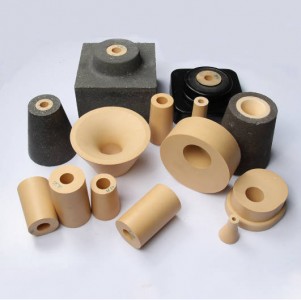
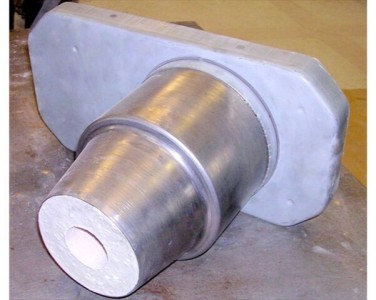
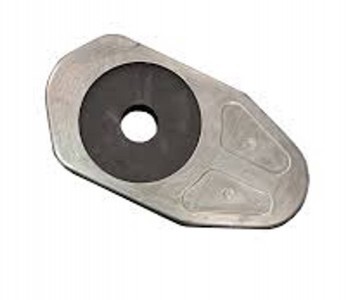
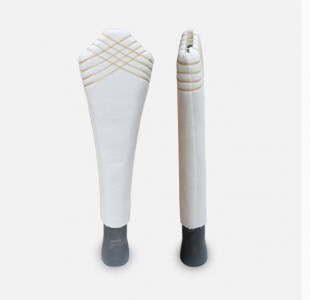
Certain additives reduce wettability by molten metals or slags, minimizing infiltration and chemical degradation. This is particularly important for tundish nozzles, slide gate plates, ladle shrouds, and other functional refractories in continuous casting.
9. Thermal and Mechanical Property Optimization
9.1 Thermal Shock Resistance
By controlling microstructure, elastic modulus, and crack propagation behavior, additives improve thermal shock resistance. This is critical for refractories exposed to rapid heating and cooling cycles.
9.2 Mechanical Strength and Wear Resistance
Additives enhance cold crushing strength, hot modulus of rupture, and abrasion resistance, ensuring structural integrity under severe mechanical and thermal loads.
10. Environmental and Sustainability Considerations
10.1 Energy Efficiency
Sintering aids that lower firing temperatures directly reduce energy consumption and CO₂ emissions in refractory manufacturing.
10.2 Reduction of Harmful Substances
Modern additive systems aim to replace environmentally hazardous materials, such as chromite-based compounds, with safer alternatives while maintaining performance.
10.3 Recycling and Circular Economy
Additives are increasingly designed to improve compatibility with recycled refractory materials, supporting sustainable production practices.
11. Future Trends in Refractory Additives
The development of refractory additives is evolving toward:
Nano-scale additives for precise microstructure control
Smart additives with self-healing or adaptive behavior
Low-carbon and environmentally friendly additive systems
Tailor-made additive packages for specific steel grades and process conditions
These innovations will continue to push the boundaries of refractory performance and service reliability.
12. Conclusion
Additives are indispensable components in modern refractory technology. Although used in small quantities, they exert a profound influence on processing behavior, microstructure evolution, thermo-mechanical properties, corrosion resistance, and overall service life. From improving workability and sintering efficiency to enhancing oxidation resistance and slag compatibility, additives enable refractories to meet the ever-increasing demands of high-temperature industrial processes.
As operating conditions become more severe and sustainability requirements more stringent, the strategic selection and optimization of refractory additives will remain a key driver of innovation and competitiveness in the
https://www.facebook.com/share/v/17Sh8YFZB9/

Комментарии пользователей