Understanding Laser Cleaning Machine Price: What It Truly Reflects

At first glance, it might seem intuitive to associate a higher price tag with better quality or performance. While that can sometimes be the case, it’s not a universal truth. Understanding the dynamics behind the laser cleaning machine price helps in making a well-informed purchase that aligns with your operational goals, budget, and cleaning requirements.
The Price Puzzle: What Are You Actually Paying For?
The laser cleaning machine price isn’t just a number; it’s a reflection of several contributing factors. From technical specifications and internal components to the brand’s reputation and after-sales support, a lot goes into the final cost.
Let’s take a deep dive into some of these contributors:
1. Power Output and Configuration
Laser cleaning machines are generally categorized by their wattage – commonly ranging from 50W up to 2000W or more. A machine with higher wattage is capable of faster cleaning, deeper penetration, and more intensive applications, such as industrial-scale rust removal or heavy-duty coating cleaning. Naturally, higher wattage models come with a steeper price. But does this mean it’s the best choice for everyone? Not quite. If your use case involves only minor cleaning tasks or occasional use, paying for higher power may be unnecessary.
2. Cooling Systems
Most laser cleaners come with either air cooling or water cooling systems. Water-cooled systems are generally more efficient for continuous and high-power usage, but they tend to raise the laser cleaning machine price. On the other hand, air-cooled systems, while more compact and economical, are suitable for lower-power operations. Again, price reflects potential usage rather than quality alone.
3. Automation and Portability
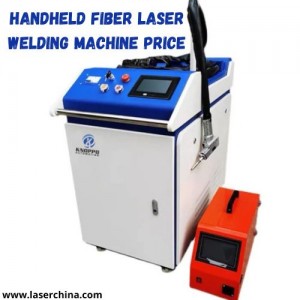
Some laser cleaning machines offer CNC automation, robotic arms, or programmable cleaning paths, designed for integration into production lines. Others are handheld and portable, ideal for on-site jobs. Fully automated systems drive the price up significantly due to the complexity and engineering required. Yet, if your work doesn’t demand automation, that price difference could go towards other important resources in your business.
4. Beam Quality and Optics
Beam consistency and focus quality affect the precision of the cleaning process. Machines with higher-quality optics ensure stable energy distribution and accurate cleaning, especially on delicate or patterned surfaces. These refined features inevitably affect pricing, but their importance depends on the precision level your projects demand.
Why the Price Range is So Broad
Laser cleaning machines can cost anywhere from a few thousand dollars to tens of thousands. Why such a massive range? Here's where things get interesting.
Let’s look at an example:
A 100W handheld fiber laser cleaning machine with air cooling might cost around $5,000 – $8,000.
A 1000W high-end water-cooled model with CNC integration might land in the $30,000 – $50,000 range or more.
Now, if someone were to compare these two machines solely based on price, they might incorrectly assume the lower-priced one is substandard. But the truth is, both machines may be perfectly matched to very different needs. The real question becomes: What are your needs?
Impact of Brand and Support Services
An often-overlooked factor in determining the laser cleaning machine price is the brand value and service package. Established manufacturers with international certifications, long-term warranties, and global support networks often charge more. This added cost may include personalized training, real-time technical support, and easy access to spare parts.
On the flip side, a lesser-known or new brand might offer similar hardware at a significantly reduced cost. While this may look attractive at first, it can pose challenges in the long run – especially if support and maintenance become necessary. So, the higher price here reflects not just the machine, but the ecosystem around it.
Misconceptions About Pricing and Performance
One of the most dangerous assumptions a buyer can make is equating price with effectiveness. Performance is multi-dimensional — speed, precision, ease of use, durability, serviceability, and more. A machine that perfectly balances all these aspects for your particular application is far more valuable than an overpriced unit with redundant features.
Sometimes, people overspend based on the fear of underperformance, ending up with overbuilt machines. In other instances, they underinvest and get a model that doesn’t meet the minimum requirements of their workflow. Either case leads to inefficiencies, losses, and frustration.
Therefore, evaluating the laser cleaning machine price demands a holistic perspective — not just on the hardware but also on your long-term business strategy.
Application-Specific Considerations
Different industries have different requirements, and this directly influences the price worth paying.
Automotive restoration might only need a 100W to 200W machine.
Oil and gas industries, dealing with thick corrosion, benefit from 1000W or more.
Historic building restoration may call for precision-focused, lower-power models to preserve the surface integrity.
If you’re investing in laser cleaning technology, matching your application with the right machine is key to cost-effectiveness — more than just hunting for a "better deal."
Tips for Smart Purchasing Without Overspending
Conduct a Needs Analysis – Define your materials, work hours, surface area size, and required cleaning depth.
Request Demos or Trials – Seeing real-world performance removes the guesswork from decision-making.
Compare Long-Term Costs – Consider energy usage, consumables (if any), service intervals, and downtime.
Ask About Upgrade Paths – Can the machine be scaled or enhanced later?
Don’t Chase the Cheapest Offer Blindly – Sometimes low cost hides inferior components, weak support, or poor durability.
Final Thoughts
When approached with clarity and purpose, investing in a laser cleaning machine becomes a powerful decision that transforms your workflow, enhances productivity, and positions you for long-term success. So, before you judge by price, dig deeper. The numbers only tell part of the story — your specific needs tell the rest.

Комментарии пользователей