What Is DTF Printing? Everything Beginners Need to Know

In the evolving world of fabric and garment decoration, Direct-to-Film (DTF) printing is quickly making its mark as one of the most accessible and versatile printing methods available today. Whether you're an aspiring custom t-shirt designer or a small business owner looking to expand into garment printing, understanding the DTF process is a great place to start.
This blog will take you through everything a beginner needs to know—from the basics of the technology to the essential equipment and benefits.
What is DTF Printing?
DTF stands for Direct-to-Film printing. Unlike traditional printing methods like screen printing or sublimation, DTF printing involves printing your design onto a special PET film and then transferring it onto fabric using a heat press.
This method allows you to print vibrant, high-resolution designs on a wide range of fabrics including cotton, polyester, nylon, blends, and even leather—something most other printing techniques struggle to achieve.
How Does DTF Printing Work?
The DTF process involves a series of steps:
Design Creation First, your artwork is created using graphic design software like Adobe Photoshop or Illustrator. It's essential to ensure that the design has high resolution and is in a compatible format, usually PNG with a transparent background.
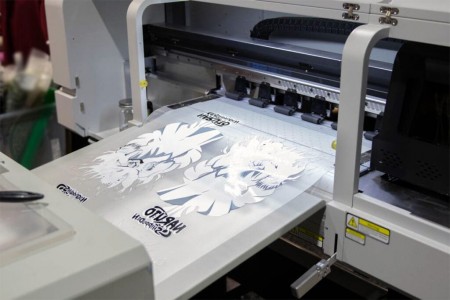
Printing on PET Film The design is printed in reverse on a PET (polyethylene terephthalate) film using specialized DTF inks. These inks are usually pigment-based and offer bright colors with excellent durability.
Powder Application While the ink is still wet, a white adhesive powder is applied to the film. This powder sticks only to the printed areas.
Curing The film with the adhesive powder is heated in a curing oven or using a heat press. This melts the powder and bonds it with the ink.
Heat Transfer Once cooled, the film is placed onto the fabric. A heat press applies pressure and heat, usually around 160–170°C for 15–20 seconds, which causes the design to permanently transfer to the fabric.
Peeling After the transfer, the PET film is peeled off—leaving the design on the fabric with a smooth, professional finish.
Why Is DTF Printing Gaining Popularity?
There are several compelling reasons why DTF printing is becoming the go-to choice for many in the custom garment industry:
Versatility One of the biggest advantages is its ability to print on virtually any fabric type, including both light and dark materials.
No Pre-Treatment Needed Unlike DTG (Direct-to-Garment) printing, DTF does not require any fabric pre-treatment, saving time and labor.
Durable Prints Prints are stretchable, crack-resistant, and can endure repeated washing without significant fading.
Low Production Costs With fewer steps and less required equipment, DTF is often more cost-effective, especially for small-scale or startup businesses.
Ease of Use Even beginners can learn and operate DTF printers with basic training. It's a more approachable entry point into garment printing than some traditional methods.
What Equipment Do You Need?
To get started with DTF printing, you'll need:
A DTF-compatible printer (converted inkjet printers or purpose-built machines)
PET film sheets or rolls
DTF inks (CMYK + white)
Hot Melt Adhesive Powder
Curing oven or heat press
Design software (eg, Photoshop, CorelDraw)
RIP software (to handle color output and white ink layering)
Optional but helpful equipment includes a film shaker for automatic powder application and a fume extractor for safety.
Common Mistakes Beginners Make
Here are a few pitfalls to watch out for when starting with DTF:
Using the Wrong Powder: Always match the powder to your specific printer and ink type. Low-quality or incompatible powder can cause poor adhesion.
Incorrect Temperature/Time Settings: Overheating or under-curing the powder can result in poor transfer or a sticky finish.
Ignoring Moisture Control: PET films should be stored in a dry environment to avoid warping or print issues.
Neglecting Maintenance: DTF printers, especially converted models, require regular maintenance to avoid clogs and ink buildup.
Who Can Benefit from DTF Printing?
DTF printing is ideal for:
T-shirt printing businesses
Custom fashion brands
Promotional product creators
Print-on-demand stores
Hobbyists and DIY enthusiasts
Whether you're taking custom orders or want to offer small-batch runs, DTF gives you flexibility, affordability, and quality in one package.
Final Thoughts
DTF printing opens up a world of opportunities for newcomers and professionals alike. Its ease of use, compatibility with various fabrics, and cost-efficiency make it one of the most promising technologies in fabric customization today.
As the industry continues to evolve, understanding the basics of DTF now could give you a competitive edge in the world of personalized apparel. Whether you're just starting or looking to upgrade your existing methods, DTF is certainly a trend worth exploring.

Комментарии пользователей